

OUR WORK
Beginning with the end in mind.
Case Study - Harrisburg University of Science and Technology
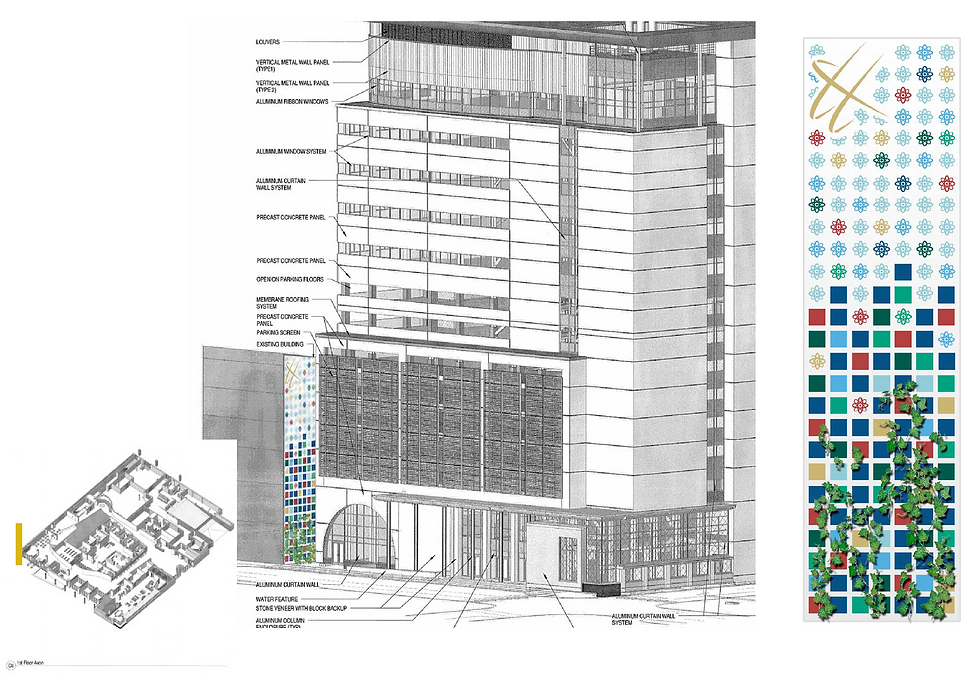
The Challenge: Establish a cohesive visual identity for a newly constructed academic building, unifying interior and exterior signage, wayfinding, and branded environments into a clear and legible campus presence.
The Approach: Working in coordination with the university and the project team, the signage and environmental graphics program was developed to complement the architecture by Burt Hill while supporting intuitive navigation, institutional branding, and long-term scalability. Design decisions balanced clarity, durability, and visual consistency across all applications.
The Result: A comprehensive signage and environmental graphics system that reinforces the university’s identity, supports everyday use, and integrates seamlessly with the building’s architecture. The completed program provides a clear framework for interior and exterior communication while setting a visual standard for future campus development.



Case Study - Riverpointe Apartments
This concept explores how a comprehensive signage and environmental graphics system can support identity, navigation, and daily use within a contemporary mixed-use residential environment.
The design approach begins with understanding the architectural character of the building and the experience of residents and visitors as they move through the site. Exterior identity, entry sequences, interior wayfinding, and amenity signage are treated as parts of a single, cohesive system rather than isolated elements.
Materiality, typography, and scale are developed to feel refined and durable, reinforcing a sense of place while remaining legible and intuitive. Sign types are organized into a clear hierarchy, allowing information to unfold naturally as people arrive, enter, and navigate the building.
The Riverpointe illustrates a process rooted in clarity, coordination, and buildability. It demonstrates how early design thinking, system planning, and disciplined documentation can lead to signage that feels integrated with the architecture and prepared for real-world execution.


Selected Project Images


